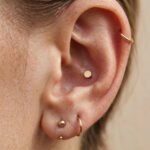







An illustrative curated ear combining lobe, conch, and helix placements in gold jewelry.
Ear piercing names can feel like a private language. A studio menu lists helix, rook, daith, and conch as if everyone already knows the map, and your saved photos probably mix five different placements without labeling any of them. This guide fixes that. It walks through the twelve placements you are most likely to meet — where each one actually sits on the ear, which jewelry suits it, and how the pieces work together — so you can walk into a studio, point at the right spot, and use the right word for it.
Lobe Piercings
The lobe is the soft, fleshy lower part of the ear with no cartilage in it. Because it is soft tissue, lobe piercings are generally the most straightforward to settle, and they accept the widest range of jewelry of any placement.
Lobe
The standard lobe piercing sits in the center of the fleshy lower earlobe, and it’s the first piercing most people ever get. Its appeal is versatility: studs, flat-back posts, hoops, huggies, and drop earrings all work here once the piercing has settled. If you are building toward multiple piercings, treat the first lobe as your anchor — it carries the largest or brightest piece in a set, and everything above it can be scaled smaller so the ear reads balanced rather than crowded.
Upper Lobe and Stacked Lobes
Upper-lobe piercings climb the lobe in a row above the first hole, following the ear’s curve toward the cartilage. A stack of two or three creates a graded line — a stud, then a smaller stud, then a tiny hoop. Spacing matters more than the jewelry itself: holes placed too close together limit what you can wear, so let your piercer mark the full row before anything is pierced, even if you add one hole at a time.
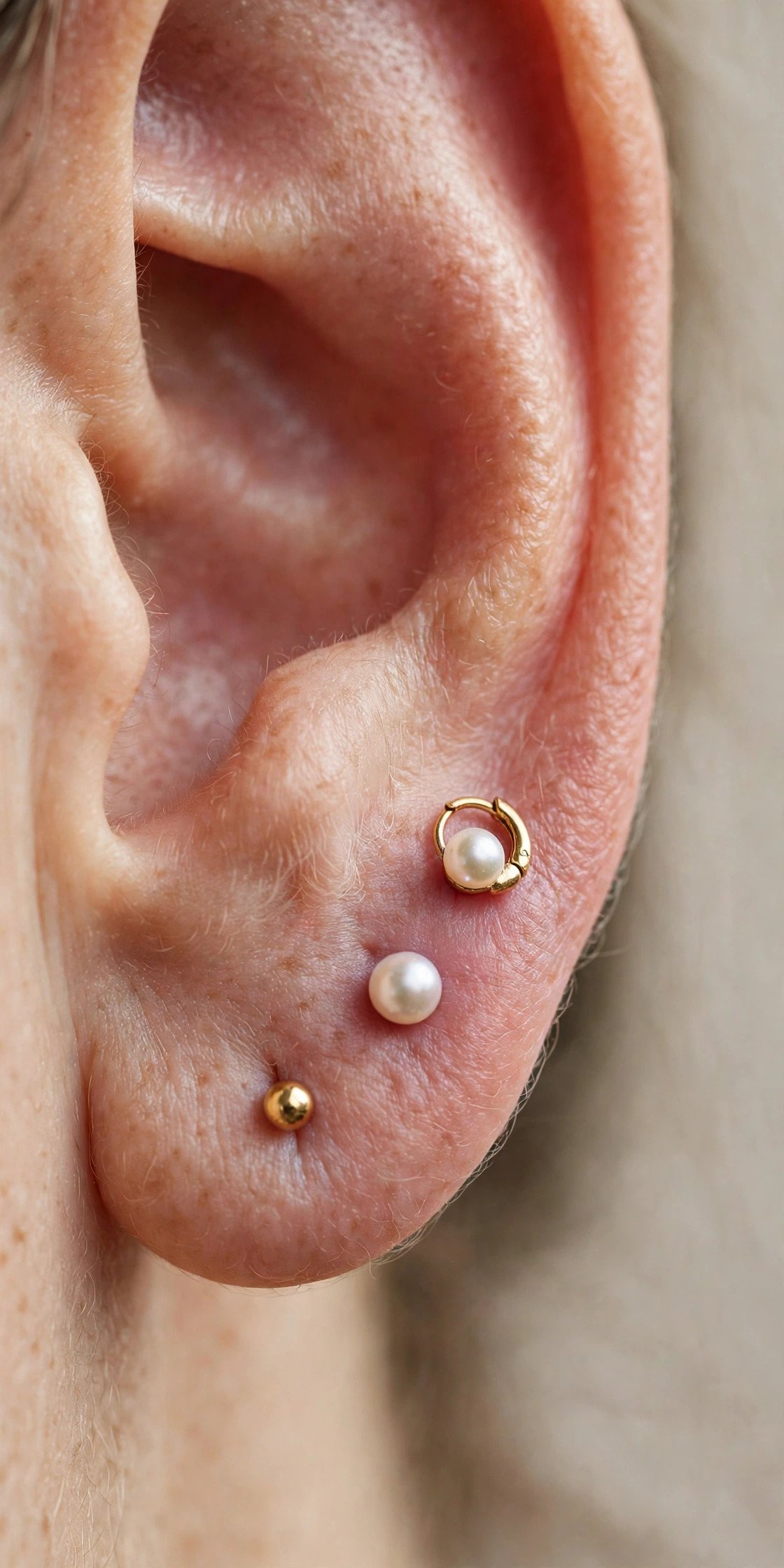
Lobe stack: three piercings rising along the soft earlobe.
Outer Cartilage Piercings
Cartilage is the firmer tissue that gives the upper ear its shape. It has less blood flow than the lobe, so cartilage piercings generally need more care and patience while they settle, and discomfort varies widely from person to person. The same name never guarantees the same result on a differently shaped ear.
Helix
The helix runs along the curled outer rim of the upper ear, and a piercing anywhere along that rim is a helix piercing. That makes it one of the most flexible cartilage placements: a flat-back stud sits quietly, a snug hoop wraps the rim, and two or three can step down the curve like a staircase. It’s often the first cartilage piercing people choose, because it pairs with almost everything.
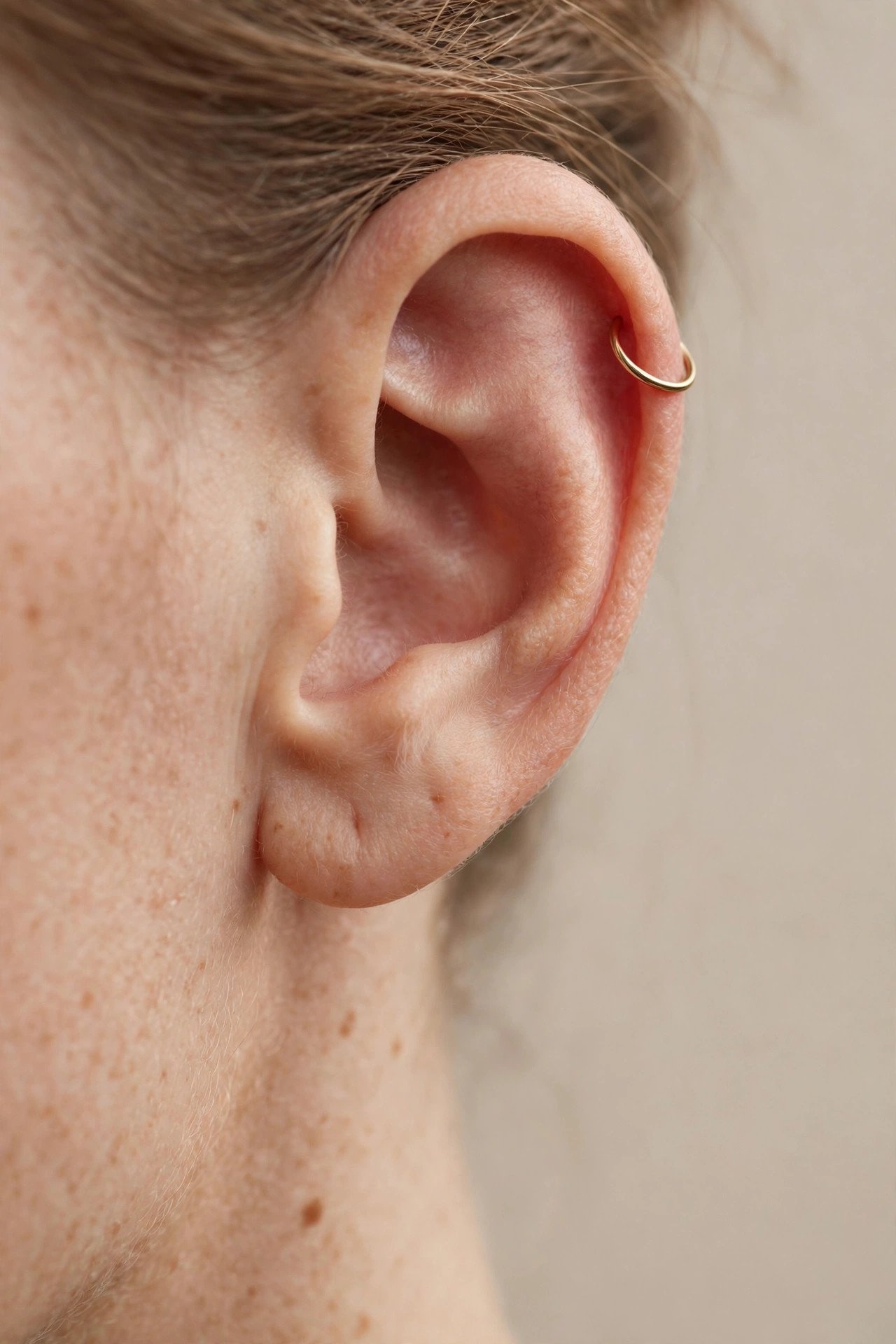
Helix: a slim hoop through the upper outer rim.
Forward Helix
The forward helix sits at the front of that same rim, on the small section of cartilage closest to your face, just above where the rim meets the head. Because the spot is compact and faces forward, it suits small, flat jewelry — tiny studs, small gems, or a short row of two or three miniature pieces. The space available differs a lot between ears, so this is a placement your piercer should measure rather than assume.
Flat (Scapha)
The flat, sometimes called the scapha, is the broad, relatively level area of cartilage in the upper inner ear, between the forward helix and the rook ridge below it. Think of it as the ear’s display shelf: a flat-back stud sits cleanly on the surface, and the open space suits larger decorative ends — a small cluster, a trio of dots, a single shaped piece — that would crowd a rim placement. It works best as a single statement point.
Industrial
An industrial is not one hole but two: a single long, straight barbell passes through two points of the upper cartilage rim, typically entering at the forward helix and exiting through the outer helix on the other side. It’s the boldest line on the ear — and the most anatomy-dependent placement in this guide. The bar must align without pressing on the flat of the ear between the two points, so some ears simply are not shaped for it. A good piercer will say so honestly and may suggest two separate piercings connected by a chain instead.
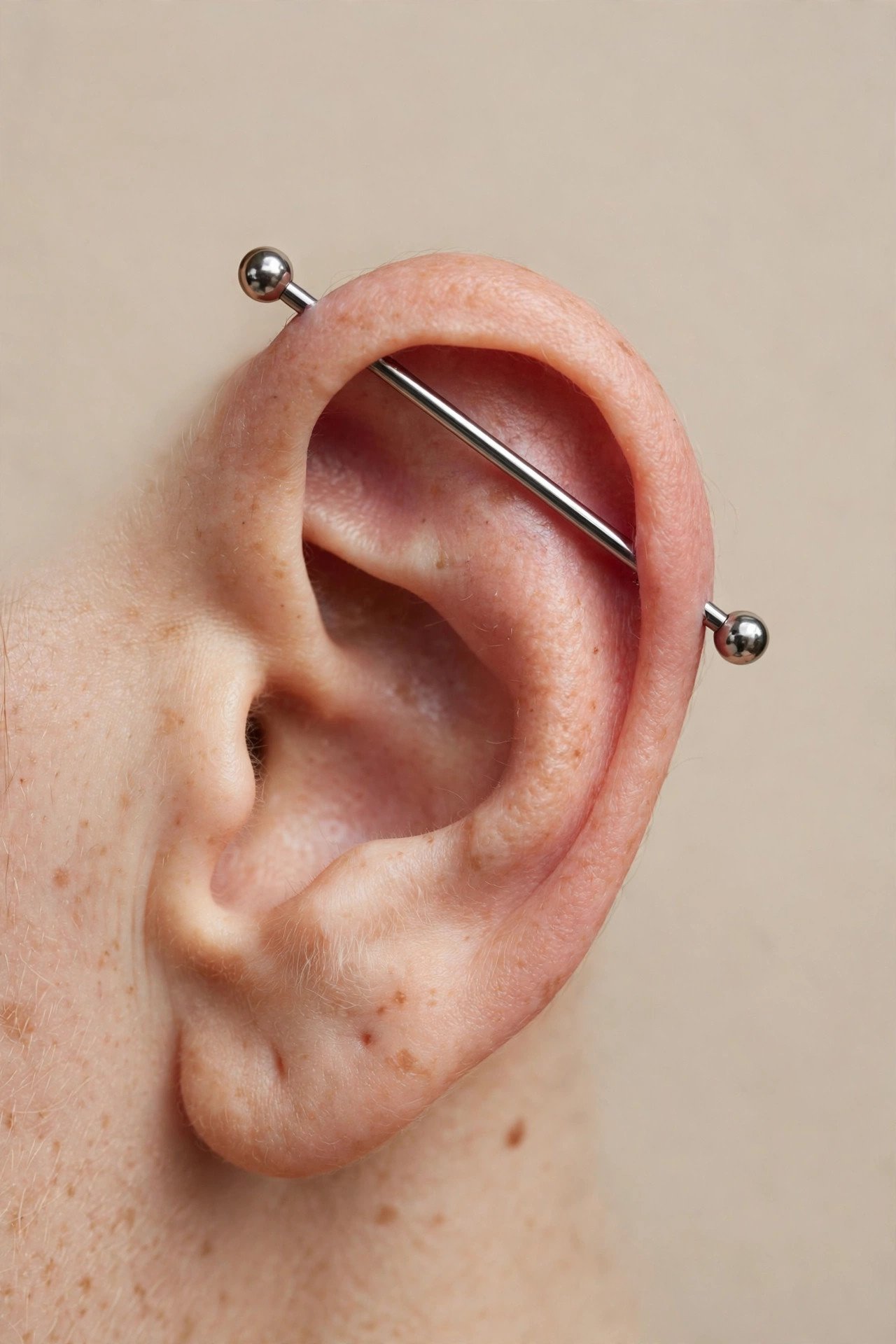
Industrial: one straight barbell joining two rim piercings.
Inner Ear Piercings
The inner ear holds the smallest, most tucked-away placements — pieces other people notice up close rather than across a room.
Tragus
The tragus is the small, rounded flap of cartilage in front of the ear canal, attached to the side of the face. A tiny flat-back stud or small gem sits neatly on it, visible from the front and easy to keep understated. Because the flap is small and fairly thick, jewelry needs to be petite. If you wear earbuds daily, mention it at your consultation — fit and routine are worth discussing before, not after.
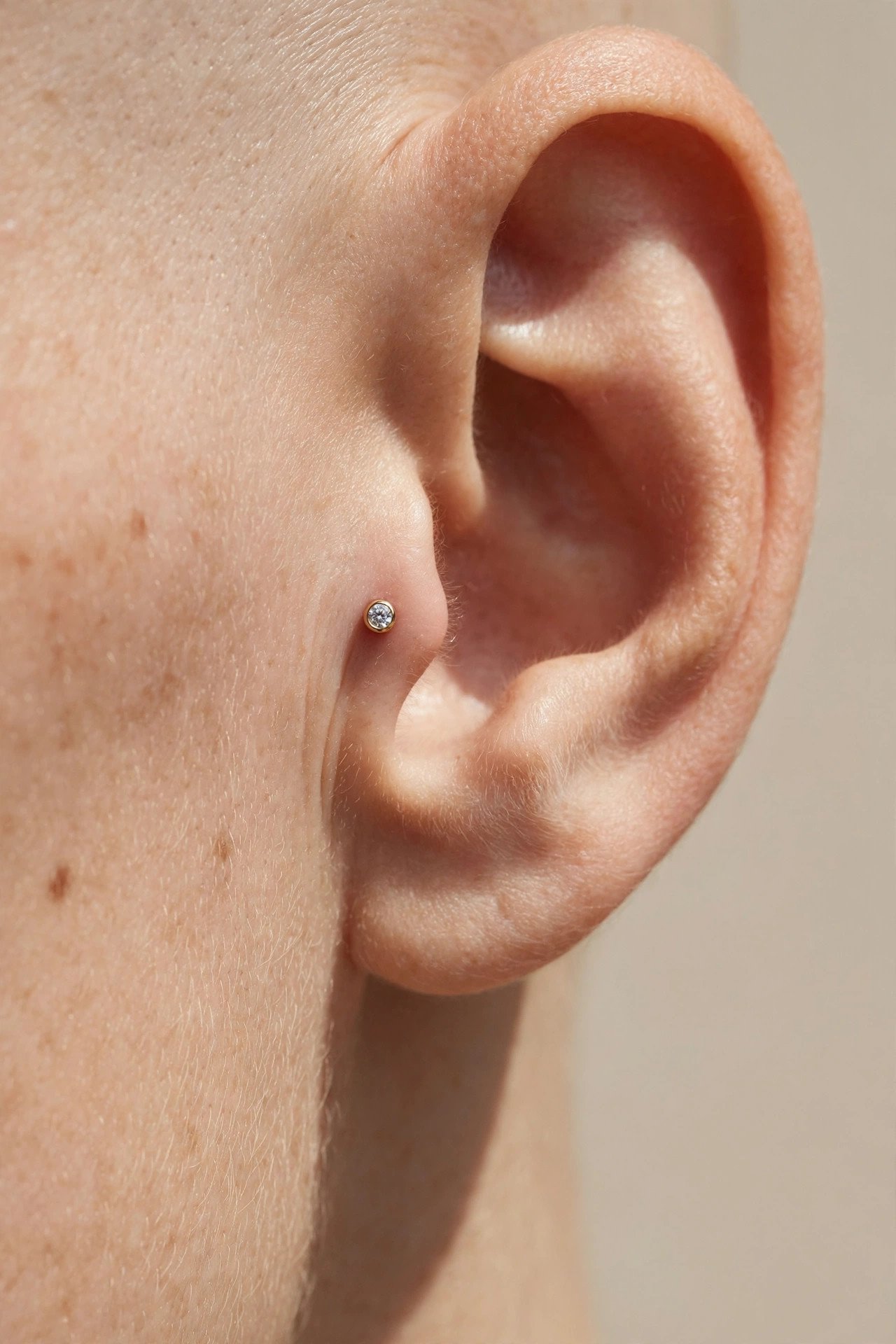
Tragus: a petite stud in the flap in front of the ear canal.
Anti-Tragus
The anti-tragus is the small raised ridge of cartilage directly opposite the tragus, just above the lobe. It is one of the less common placements, worn with a small stud or a tiny curved piece that follows the ridge. Suitability depends heavily on how pronounced that ridge is on your ear — on some ears it’s barely there — so treat it as a consultation-first piercing.
Conch
The conch is the large cupped bowl in the center of the ear, named for its shell-like shape. An inner conch sits in the middle of that bowl and is usually styled with a flat-back stud — a single gem or disc reads like a point of light in the ear’s center. An outer conch sits higher and flatter, toward the bowl’s edge. Once a conch has fully settled, some people switch to a hoop that wraps the outer rim, but that’s a later change to plan with your piercer.
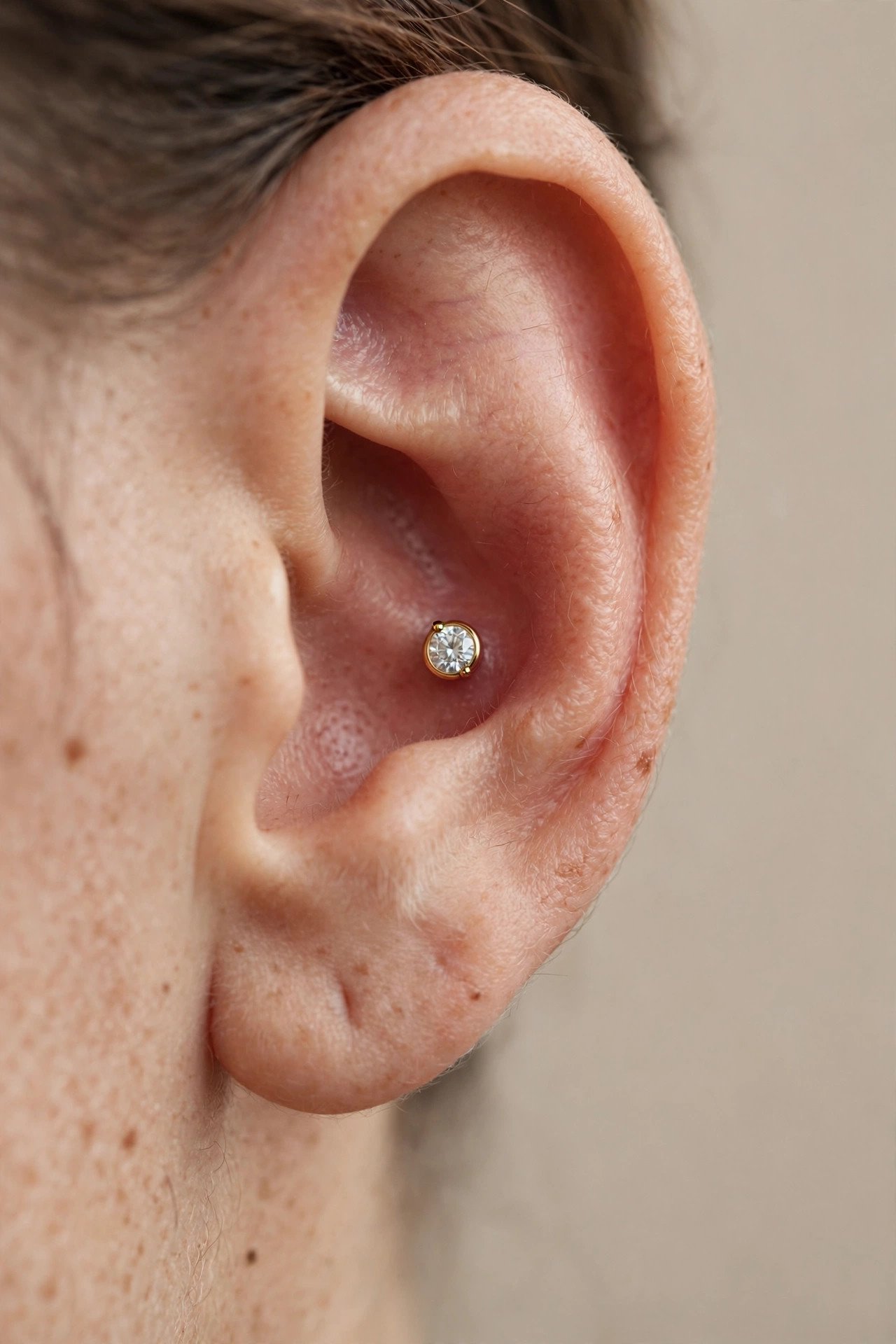
Conch: a single stud placed in the ear’s central bowl.
Daith
The daith passes through the innermost fold of cartilage, the small ridge sitting horizontally just above the ear canal opening. It is almost always styled with a ring — a seamless hoop or clicker that hangs within the fold. The fold is small, and on some ears too shallow to hold the piercing well, so anatomy decides this one. You may see health claims attached to the daith online; there’s no reliable evidence behind them. Choose it because you like how it looks.
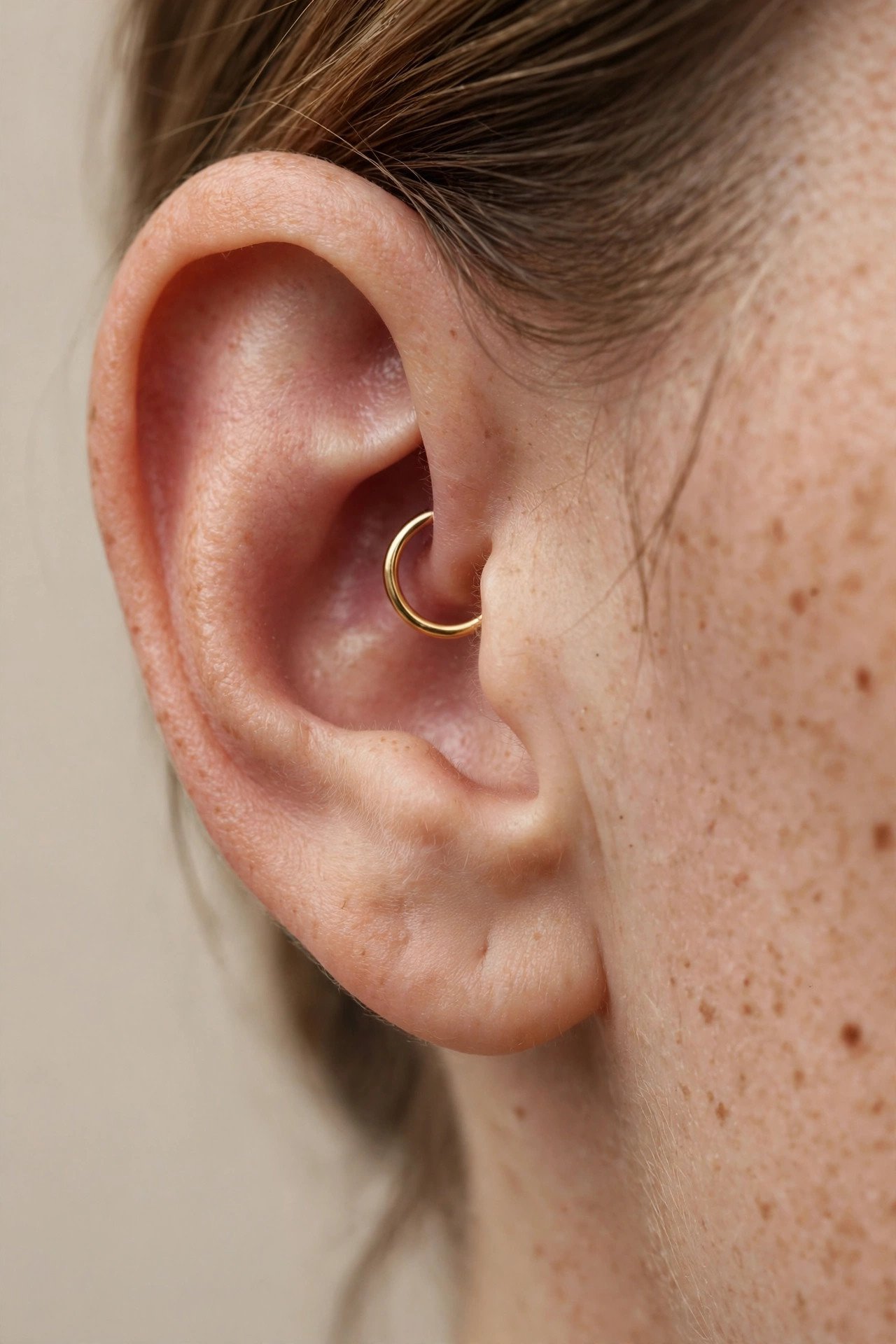
Daith: a small hoop through the innermost cartilage fold.
Rook
The rook sits in the thick vertical fold of cartilage in the upper inner ear, above the daith and below the flat. It is typically worn with a curved barbell, which follows the fold, or a small ring once settled. The fold is sheltered, so a rook rarely catches on hair or clothing — but that tucked position makes it one your piercer needs to see in person to judge.
Snug (Anti-Helix)
The snug, also called the anti-helix, pierces the raised inner ridge that runs vertically midway across the ear, parallel to the outer rim. It is usually worn with a small curved barbell that hugs the ridge. It’s also known for being particular: the ridge varies in thickness more than almost any other feature of the ear. Many piercers steer clients whose ridge is shallow toward a faux snug — separate conch and mid-helix piercings that imitate the look — which is a sensible alternative, not a lesser one.
How to Plan a Curated Ear
“Curated ear” simply means the piercings are chosen as a set rather than collected at random. Start with the anchor: most people build from the lobe outward, because lobe piercings settle the most predictably and let you learn how your body responds before you commit to cartilage. Then choose one focal point — a conch stud, a daith ring, an industrial bar — and keep the remaining pieces quieter so it earns its attention.
Work in one metal family per ear, or mix metals deliberately rather than accidentally. Leave space between planned pieces; a crowded ear usually comes from adding a piercing because there was a gap, not because the set needed it. Finally, stage the work: several new cartilage piercings at once means settling them all at the same time, often on the ear you sleep on. Many people build one ear at a time, a piece or two per visit.
Before You Book: Choosing a Professional Piercer
The studio matters more than the jewelry. Look for a clean, dedicated piercing studio or a piercer in a reputable shop, and check the rules where you live: licensing and age requirements vary by state and city, and a professional studio will state its policies clearly.
Ask how piercings are performed. Professional piercers work with sterile, single-use needles, opened in front of you, and sterilize reusable tools in an autoclave. For cartilage especially, a needle in trained hands is the professional standard; a spring-loaded piercing gun cannot be properly sterilized and drives a blunt stud through tissue, which is why reputable studios avoid them on cartilage. Check that the piercer assesses your anatomy before promising a placement and shows you the marked position in a mirror.
The same judgment applies to any permanent body art: if you are weighing a piercing against a first tattoo, the thinking in our guide to small wrist tattoo ideas with meaning — meaning, placement, and timing — is worth borrowing. After your appointment, follow the aftercare guidance your own piercer gives you, and go back to them with questions rather than troubleshooting from social media.
Frequently Asked Questions
Which ear piercing should I get first?
For most people, a lobe piercing — soft tissue is generally the easiest to settle, and the jewelry options are endless. If your lobes are done and you want cartilage, a helix is the most common next step: it suits many ears and pairs with everything you might add later.
Do cartilage piercings hurt more than lobe piercings?
Most people describe cartilage piercings as a sharper, briefer pressure than a lobe piercing, but discomfort is genuinely individual — it depends on the placement, your cartilage thickness, and your own sensitivity. Any chart assigning you an exact pain score is guessing about your body; treat those numbers as entertainment, not information.
Can everyone get an industrial or daith piercing?
No — and that’s normal. Both depend on specific features — the rim’s alignment and the space under it for an industrial, the depth of the inner fold for a daith. A professional piercer will examine your ear and tell you whether the placement will sit well. Being redirected to a similar look that suits your anatomy is a sign of a good studio.
How many piercings can I get in one visit?
Make that decision with your piercer, who can see the placements and how your ear responds during the appointment. As a planning principle, fewer at once means a simpler settling period for each, and most curated ears are built over several visits.
When can I change my jewelry?
Later than you will want to. A piercing can look calm on the surface while it is still settling underneath, and swapping jewelry too early is a common way people set themselves back. Keep the initial jewelry in until your piercer confirms the piercing is ready for a change.
Conclusion
The map is simpler than the menu makes it look: soft lobe at the bottom, a rim of cartilage around the top and outside, and a handful of small inner folds, each with its own name and jewelry. Pick the placement whose look you keep coming back to, have your anatomy checked honestly, and choose the studio with the same care you would give the jewelry. An ear built slowly, one well-placed piece at a time, still looks deliberate years from now.
