







Thick wavy hair at shoulder length lives or dies on one thing: where the weight comes out. Cut it all to one length and it flares into a triangle. Layer it carelessly and the ends turn wispy while the mid-lengths stay heavy. The twelve shoulder length haircuts for thick wavy hair below are organized around that problem. Each one removes bulk in a different place — interior, ends, perimeter, or underneath — so you can match the cut to your density, your wave pattern, and the styling you honestly do on a weekday morning.
The 12 Cuts
1. Classic Layered Lob With Long Layers

A long bob ending at the shoulders, with graduated layers that start below the chin and blend through the ends. The layering is long and smooth rather than choppy, so the surface reads polished while the interior sheds the weight that makes a one-length cut feel like a curtain. Suits medium-to-high density hair with loose or medium waves. Diffuse on low heat or air-dry with a light leave-in through the mid-lengths. Trims every eight to ten weeks; it grows out gracefully.
2. Blunt Shoulder-Length Bob With Hidden Layers

One clean line: a blunt perimeter landing right at the shoulders, no steps or shelves. The trick is invisible — weight comes out of the interior and underneath while the outer line stays intact, so the bob keeps its structure without a one-length cut’s heavy feel. Thick hair with looser waves suits it best. A tight wave pattern pushes a blunt edge outward, and the line is harder to keep crisp. This is the most polished option here, and the least forgiving: trims every six to eight weeks, and humidity will test that straight edge despite a smoothing cream on the ends.
3. Soft Shag With Curtain Bangs

The shag takes the opposite approach: layers everywhere, starting high, with feathered ends and a center-parted fringe sweeping to the cheekbones. That’s why it works on very thick hair — weight comes out through the whole cut, and the result is movement rather than mass. This version is softer than a heavily razored shag, with blended rather than shredded ends. Works well with defined waves, and with rounder or longer faces that benefit from width at the sides. Styling is the easiest here: scrunch in texture spray and air-dry. The trade-off is the fringe, which needs a trim every four to six weeks.
4. Face-Framing Layers With a Shoulder-Length Base
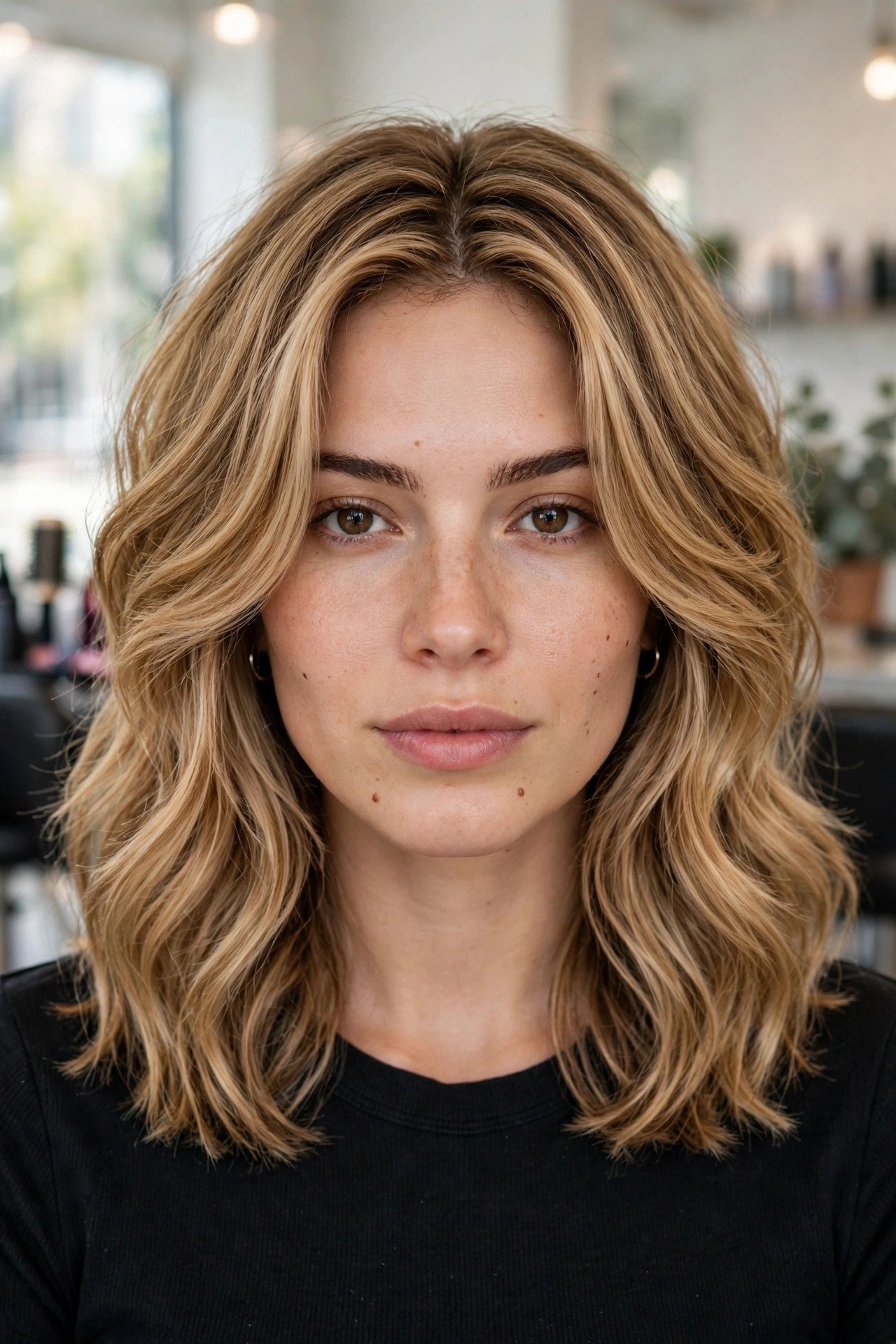
Here the length stays intact at the back while the cutting concentrates around the face: graduated steps starting near the cheekbones and cascading down to the base length. Those steps lighten the front, where thick hair feels heaviest, and give the waves around your face their own movement. A good match if you want visible change without losing fullness — it works across most wave patterns. Very dense hair may still feel heavy at the nape, since the back keeps its weight — ask for light interior work there. Air-dry, diffuse, or smooth just the front; trims stretch to eight to twelve weeks.
5. A-Line Lob (Shorter Back, Longer Front)
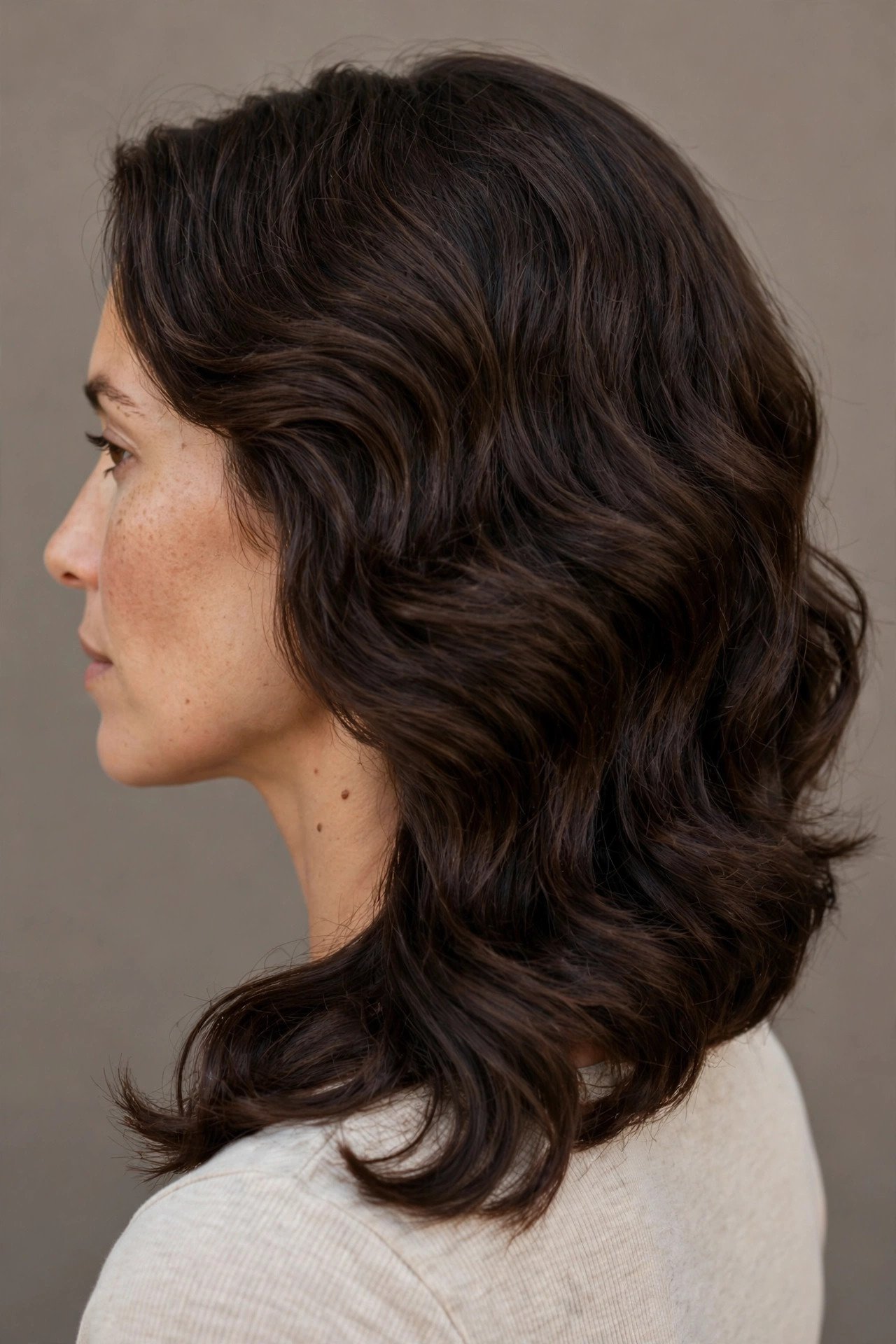
Cut shorter at the nape and sloping forward, so the front reaches the collarbone while the back sits above the shoulders. That diagonal does real work: the shorter back removes the zone where density stacks up, and the longer front keeps the face-framing you would miss in a short bob. It suits medium and defined waves, and anyone whose hair is thicker at the back than the front. The angle is the maintenance — as the back grows, the slope flattens, so trims every six to eight weeks keep it sharp. Waves soften the angle. A blowout shows it best.
6. Textured Wavy Lob With Point-Cut Ends

This lob keeps a simple outline and puts the work into the last two inches: point-cutting breaks the ends into separated, piecey tips. On thick wavy hair that matters — the ends stop clumping into one heavy curtain, and individual waves can bend on their own. It suits loose-to-medium waves and readers who wear their hair air-dried and undone. Prefer a sleek finish? Textured ends always look slightly untidy — the blunt bob above is the better match. The shape holds eight to ten weeks. If your strands are fine despite high density, ask for a lighter hand — heavy texturizing thins the ends’ appearance.
7. Soft Wolf Cut for Thick Waves

The wolf cut pairs heavy, choppy crown layers with tapered, lighter ends — volume on top, air at the bottom. Thick wavy hair supplies both halves: density for the crown layers to work with, and a wave pattern that keeps tapered ends from looking stringy. This version keeps the mullet-like contrast gentle, so it reads as a textured cut rather than a costume. It suits defined waves, high density, and anyone who likes crown volume; with loose waves, the crown layers can fall flat and the shape loses its point. Style with texture products and rough-drying; expect a reshaping visit around eight weeks.
8. U-Shaped Layered Cut
Instead of a straight hemline, this cut curves: shorter at the sides, slightly longer in the center back, with long layers following the same arc. The U suits thick hair because it avoids a straight perimeter’s two failure points — corners sticking out at the sides and a heavy shelf across the back. It’s a good fit for loose and medium waves, and for anyone keeping maximum fullness. A quiet, conservative shape. Maintenance is among the lowest here: the line holds ten weeks or more, and the curve keeps a low ponytail’s ends from looking blocky.
9. Deep Side-Part Cut With Sweeping Layers
Sometimes the cut is simple and the part does the work. Long, mostly uniform layers pair with a deep side part, so the front sweeps across the forehead and one side carries the volume. That asymmetry is useful: instead of density expanding evenly on both sides, the weight is directed, and the flatter side tucks or pins easily. Best on hair that falls to one side naturally — and for anyone not ready for a fringe. The upkeep is in the styling — root lift on the heavy side and a few dryer minutes to set the direction after washing. Trims stretch to ten weeks.
10. Feathered Shoulder-Length Cut
Feathering brushes the layers back and away from the face, the ends flipping outward in smooth wings. It is a retro idea that solves a thick-hair problem: layers directed backward cannot fall forward into a heavy curtain, and the outward flip keeps the perimeter light. It suits medium waves and readers who blow-dry most days — feathering is a styled finish, and air-drying will not produce the same swept effect. The cut holds eight to ten weeks, but the daily routine is a round-brush blowout, not a wash-and-go.
11. Bottleneck Bangs With Shoulder-Length Layers
Bottleneck bangs start narrow at the forehead’s center and widen as they curve to the cheekbones, merging into long layers. On thick hair that is practical: a full straight fringe cut from dense hair can sit like a shelf, while the bottleneck’s narrow center keeps the front light. A fit for medium and defined waves, and for foreheads that feel crowded by a heavy blunt fringe. Two cautions: a wavy fringe needs a few minutes of styling on humid days, and a strong cowlick can fight the center opening entirely. Fringe trims run every four to six weeks.
12. Shoulder-Length Cut With a Hidden Nape Undercut
The specialist fix for one complaint: hair so dense at the nape that it feels hot, heavy, and impossible to dry. A small section underneath is clipped short and hidden beneath the full length above, which still falls to the shoulders. Removing that underlayer takes out a surprising amount of bulk and drying time without changing the visible silhouette. It suits very high density at the back, any wave pattern. One consideration: the undercut shows when hair is lifted — think first if you wear sleek updos for work. The clipped section needs maintenance every three to five weeks.
How to Choose a Shoulder-Length Cut for Thick Wavy Hair
Start with density, not pictures. If your hair is thick everywhere, distributed layering — the shag, the wolf cut, the classic layered lob — removes weight most evenly. If density concentrates at the back, targeted fixes like the A-line or the hidden undercut solve it without thinning the front.
Next, your wave pattern. Loose waves hold a blunt or lightly layered line well. Defined waves expand sideways as they dry, so they need enough length to weigh the pattern down or enough layering to give it somewhere to go — cuts that ignore this are how the triangle happens.
Then count your styling minutes honestly: air-dry-friendly options (the shag, the textured lob, the U-shape) behave very differently from styled finishes (the feathered cut, the blunt bob). If layer placement is new to you, our guide to layered hairstyles and how layers change thick hair explains the mechanics in more depth, and the full Hairstyles & Haircuts category covers cuts at other lengths.
What to Ask Your Hairstylist
- “Can you check the length dry?” Wavy hair shrinks as it dries; a cut at the shoulders wet can land well above them dry. Ask for a dry check — or a full dry cut — before the final length is set.
- “Where will the weight come out?” Interior, ends, perimeter, and nape are different answers with different grow-outs. A good stylist will state their plan before cutting.
- “Please go easy on the thinning shears.” On dense wavy hair, heavy thinning can leave ends frizzy and see-through while the roots stay bulky. Interior layering usually gives a cleaner result — say so, because thinning is a default move with thick hair.
- “How often does this shape need a trim — really?” Answers here range from three weeks (undercut) to twelve (long layers). Get the number before you commit.
Frequently Asked Questions
Will shoulder length make my thick wavy hair look like a triangle? It can, if the cut is one length with no interior work — the weight collects at the bottom and the widest point lands at the ends. Interior layering, an angled or curved perimeter, or weight removal at the nape all prevent it: the triangle is a cutting problem, not a length problem.
Should thick wavy hair be cut wet or dry? Either can work, but the length check matters: waves spring up as they dry, so a wet cut risks ending shorter than planned. Many stylists cut wet for the basic shape, then refine and check the length dry — ask how yours accounts for shrinkage.
How do I stop shoulder-length thick hair taking so long to dry? The cut helps more than the dryer does. Interior layers mean less water held in the hair; a hidden undercut cuts drying time further at the nape, where hair dries slowest. Rough-drying the roots first, before diffusing the lengths, also helps.
How fast will a layered shoulder-length cut grow out? Long, blended layers are the most forgiving — most people get eight to twelve good weeks. Structured shapes (blunt perimeters, A-line angles, undercuts) show regrowth sooner, needing attention every three to eight weeks. If you dislike frequent appointments, choose the layered end of this list.
Conclusion
Shoulder length isn’t a compromise — for thick wavy hair, it’s often where density becomes an asset instead of a chore, provided the cut removes weight in the right place. Decide where your hair is heaviest, pick the cut that answers that problem, and have the dry-length and thinning-shears conversations before the scissors come out. The right match still looks like your hair — just lighter, quicker to dry, and shaped on purpose.

One comment on “12 Shoulder-Length Haircuts for Thick Wavy Hair”